
Sending your child to daycare for the first time is a major milestone—for both of you.
As exciting as this new chapter can be, it’s also completely normal to have questions.
“Is my child too young?”
“Will they cry all day?”
“How will they adjust to a new environment?”
“Am I making the right decision?”
These are questions almost every parent asks before enrolling their child in a daycare program.
The truth is, there isn’t one perfect age when every child is “ready.” Every child develops at their own pace, and readiness depends on far more than age alone.
Some children are naturally social and eager to explore new environments, while others need more time to feel comfortable around unfamiliar people.
Rather than focusing only on birthdays, it’s more helpful to look for developmental, emotional, and behavioral signs that indicate your child may be ready to benefit from a quality childcare program.
In this guide, we’ll explore the most common signs that children are ready for daycare, how parents can make the transition easier, and what to expect during those important first weeks.
Why Daycare Can Be a Positive Step
Many parents worry that enrolling their child in daycare means spending less time together.
In reality, a high-quality daycare becomes an extension of your child’s learning environment—not a replacement for your family.
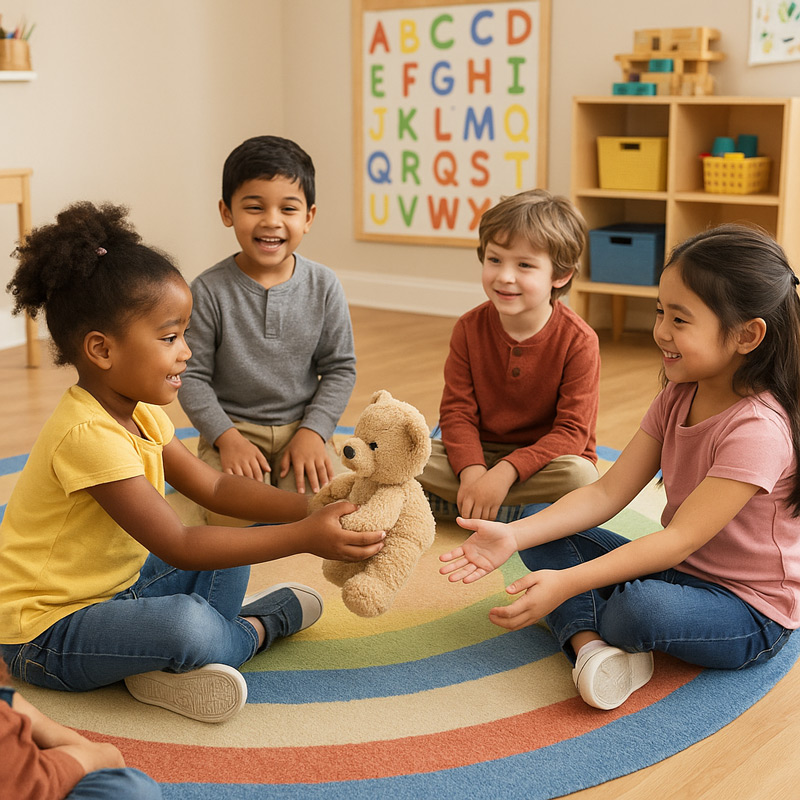
Children continue learning at home with you while also gaining valuable experiences through daily interactions with teachers and other children.
A nurturing daycare provides opportunities to:
- Build social skills
- Develop communication
- Encourage independence
- Learn through play
- Follow healthy routines
- Explore creativity
- Build confidence
- Prepare for preschool and kindergarten
For many children, daycare becomes the first place where they begin learning how to navigate the world independently while still feeling safe and supported.
Every Child Develops Differently
One of the biggest misconceptions about daycare is that every child should be ready at the same age.
That’s simply not true.
Development isn’t a race.
Some toddlers begin exploring confidently around others very early.
Others prefer observing quietly before joining activities.
Both approaches are completely normal.
Instead of comparing your child with friends, siblings, or neighbors, pay attention to your child’s unique personality, emotional development, and daily behaviors.
The goal isn’t to ask:
“Is my child old enough?”
The better question is:
“Is my child showing signs that they’re ready for this next step?”
Sign #1: Your Child Is Curious About Other Children
One of the earliest signs of daycare readiness is curiosity.
Children naturally begin watching other children long before they actively play together.
You may notice your child:
- Smiling at other children
- Watching children at the playground
- Trying to join simple games
- Showing excitement around groups
- Copying other children’s actions
These early social behaviors show that your child is becoming interested in learning from peers.
A quality daycare provides daily opportunities for children to build friendships, practice sharing, and develop important communication skills.
Even if your child is shy at first, regular positive interactions often help them become more confident over time.
Sign #2: They Can Spend Short Periods Away from You
Separation anxiety is completely normal during early childhood.
In fact, it often shows that children have formed healthy attachments with their caregivers.
However, children who are beginning to tolerate short separations may adjust to daycare more smoothly.
Ask yourself:
Can your child comfortably stay with:
- Grandparents?
- A trusted babysitter?
- Another family member?
- A close friend?
Do they eventually settle after you leave?
Or do they remain distressed for long periods?
Remember, crying at drop-off doesn’t necessarily mean daycare isn’t the right choice.
Many children cry for a few minutes before happily joining activities once their parents leave.
Experienced teachers understand this adjustment process and know how to comfort children while helping them feel secure.
Sign #3: They Show Interest in Exploring Independently
As children grow, they naturally begin wanting to do more things on their own.
You might notice your child:
- Walking into new rooms confidently
- Exploring toys independently
- Choosing favorite activities
- Solving simple problems
- Playing alone for short periods
These behaviors show growing independence—an important skill that daycare continues to strengthen.
High-quality childcare programs encourage children to make age-appropriate choices while providing gentle guidance and support.
Small moments of independence gradually build confidence that benefits children far beyond the classroom.
Sign #4: Your Child Can Follow Simple Routines
Daily routines help children feel safe because they know what comes next.
If your child already follows simple routines at home, they may adapt more easily to a structured daycare schedule.
Examples include:
- Washing hands before meals
- Sitting for snack time
- Cleaning up toys
- Listening to short stories
- Following simple directions
- Transitioning between activities
Children don’t need to perform these tasks perfectly.
What’s important is that they’re beginning to understand predictable routines and expectations.
Daycare reinforces these habits through consistency, making daily transitions easier over time.
Sign #5: They Are Becoming More Comfortable Communicating Their Needs
Children don’t need to speak in full sentences before starting daycare.
Communication looks different at every age.
Your child may already communicate by:
- Pointing
- Using simple words
- Gestures
- Facial expressions
- Basic phrases
- Asking for help
Being able to express simple needs—such as being hungry, tired, thirsty, or needing comfort—helps teachers respond quickly and appropriately.
Daycare also provides an environment where communication skills grow naturally through conversations, songs, storytelling, and play.
Sign #6: Your Child Enjoys New Experiences
Some children naturally become excited when they discover something new—a colorful toy, a different park, a new book, or an unfamiliar activity.
Curiosity is a wonderful sign of healthy development.
If your child enjoys exploring new environments, daycare can become a place where that curiosity continues to grow.
Throughout the day, children are introduced to experiences they may not always have at home, including:
- Art projects
- Sensory activities
- Music and movement
- Science exploration
- Outdoor discovery
- Storytelling
- Group games
- Hands-on learning
Every new activity helps children build confidence while encouraging them to ask questions, experiment, and discover the world around them.
Sign #7: They Can Play Independently for Short Periods
Independent play is another important milestone.
This doesn’t mean your child should entertain themselves for hours.
Instead, ask yourself:
Can they spend 10–15 minutes exploring toys, puzzles, books, or pretend play without needing constant attention?
Children who are beginning to enjoy independent play often adapt more easily to daycare because they’ll experience different learning centers and activities throughout the day.
Teachers remain actively involved, but children are also encouraged to make choices, solve simple problems, and explore materials at their own pace.
Independent play supports:
- Creativity
- Problem-solving
- Concentration
- Decision-making
- Confidence
These skills continue developing long after children begin daycare.
Sign #8: They Are Beginning to Express Emotions in Healthy Ways
Young children naturally experience frustration, excitement, sadness, and disappointment.
The important milestone isn’t avoiding big emotions—it’s beginning to communicate them.
Your child may start saying things like:
“I’m sad.”
“I’m tired.”
“I don’t like that.”
Or they may communicate through gestures and facial expressions.
At daycare, experienced teachers help children:
- Name emotions
- Practice self-regulation
- Develop empathy
- Solve simple conflicts
- Learn appropriate ways to express feelings
Emotional development is just as important as academic learning during the early years.
Sign #9: They Show Interest in Learning
Children don’t need to know the alphabet or count to 100 before attending daycare.
Learning begins with curiosity.
You might notice your child:
- Asking “Why?”
- Looking through books
- Singing songs
- Enjoying puzzles
- Matching colors
- Counting objects
- Pretending during imaginative play
These everyday moments demonstrate that your child is eager to learn.
Quality childcare programs nurture this curiosity through age-appropriate activities that make learning enjoyable rather than stressful.
Sign #10: You’re Ready Too
Parents often focus entirely on whether their child is ready.
But here’s an important question:
Are you ready?
Starting daycare is an emotional transition for parents as well.
It’s normal to feel:
- Nervous
- Guilty
- Excited
- Emotional
- Uncertain
These feelings don’t mean you’re making the wrong decision.
They simply reflect how deeply you care about your child.
Choosing a trusted daycare allows your child to build new skills while giving you peace of mind knowing they’re in a safe and nurturing environment.
Remember, daycare isn’t replacing your role as a parent.
It’s becoming part of your support system.
Does Crying Mean Your Child Isn’t Ready?
One of the biggest fears parents have is seeing their child cry during drop-off.
The good news?
Crying is completely normal.
Many children cry during the first few days—or even the first few weeks—as they adjust to a new routine.
That doesn’t mean daycare isn’t a good fit.
Experienced teachers know how to comfort children through:
- Warm greetings
- Favorite activities
- Gentle reassurance
- Predictable routines
- Positive distractions
In many cases, children stop crying just a few minutes after their parents leave.
Parents often experience more anxiety than their children during this transition.
Consistency is key.
The more predictable the routine becomes, the more secure children begin to feel.
How to Prepare Your Child for Their First Day
A little preparation can make a big difference.
Here are several ways to help your child feel more comfortable before starting daycare:
Visit Together
Schedule a tour and allow your child to explore the classroom before their first day.
Seeing the environment in advance makes it feel more familiar.
Talk About Daycare Positively
Use encouraging language.
Instead of saying,
“I’ll miss you all day.”
Try saying,
“You’re going to have so much fun making new friends and playing today.”
Children often reflect their parents’ emotions.
Confidence is contagious.
Practice Short Separations
If possible, allow your child to spend short periods with trusted family members before daycare begins.
This helps them understand that parents always return.
Create a Consistent Morning Routine
Children thrive on predictability.
Wake up at the same time each morning.
Eat breakfast together.
Prepare backpacks the night before.
Leave home calmly without rushing.
A familiar routine creates emotional security.
Keep Goodbyes Short
Long emotional goodbyes often make separation more difficult.
Instead:
Give a hug.
Smile.
Say goodbye confidently.
Tell your child you’ll be back after their fun day.
Then leave.
Teachers can begin comforting your child immediately.
Common Mistakes Parents Make
Even with the best intentions, some habits can make the transition more challenging.
Avoid these common mistakes:
❌ Sneaking away without saying goodbye.
❌ Returning multiple times after leaving.
❌ Talking negatively about daycare.
❌ Comparing your child to others.
❌ Expecting a perfect first week.
Adjustment takes time.
Patience, consistency, and trust are incredibly important during this stage.
Expert Tip
Children don’t need to be “perfectly ready” before starting daycare.
In fact, many of the skills parents hope their children will develop—such as independence, communication, social confidence, and routine—are exactly the skills that quality daycare helps build.
Sometimes children become ready because of daycare, not before it.
Why Families Choose Twinkle Child Care
At Twinkle Child Care, we understand that starting daycare is a big step for every family.
That’s why we’ve created an environment where children feel safe, supported, and excited to learn every day.
Our programs are designed to help children build confidence through meaningful experiences, hands-on learning, creative play, and positive relationships with caring educators.
Every child develops at their own pace, and we celebrate every milestone—whether it’s making a first friend, learning to communicate, trying a new activity, or becoming more independent.
Families choose Twinkle because we provide:
- A safe and secure environment
- Experienced and compassionate educators
- Learning through play
- Age-appropriate educational activities
- Healthy meals and snacks
- Daily outdoor play
- Strong communication with parents
- Flexible childcare programs
- A welcoming community where every child belongs
We believe every child deserves a place where they can learn, grow, and shine.
How Parents Can Make the Transition Easier
Starting daycare is a partnership between families and teachers.
The smoother the transition at home, the more confident your child will feel at daycare.
Simple things can make a big difference:
- Keep bedtime and morning routines consistent.
- Talk positively about daycare.
- Label your child’s belongings.
- Pack comfort items if the center allows them.
- Celebrate small milestones.
- Trust the teachers during the adjustment period.
- Stay consistent with attendance whenever possible.
Remember that confidence grows over time.
Every successful drop-off helps children feel more secure the next day.
Final Thoughts
There isn’t a perfect checklist that determines whether every child is ready for daycare.
Instead, readiness comes from a combination of emotional, social, and developmental milestones.
If your child is becoming curious, communicating their needs, enjoying new experiences, following simple routines, and beginning to explore independently, they may be ready to benefit from a quality childcare program.
At the same time, it’s perfectly normal if some of these skills are still developing.
That’s one of the greatest benefits of daycare.
Children don’t arrive knowing everything—they grow through the daily experiences, friendships, routines, and encouragement they receive in a nurturing environment.
As a parent, trust your instincts, ask questions, and choose a childcare center that makes both you and your child feel welcomed, supported, and confident.
The right daycare doesn’t simply prepare children for school.
It helps prepare them for life.
Frequently Asked Questions
What is the best age to start daycare?
There isn’t one “perfect” age. Many children begin daycare as infants, while others start as toddlers or preschoolers. Readiness depends on your family’s needs and your child’s individual development rather than age alone.
Is it normal for my child to cry at daycare drop-off?
Yes. Many children cry during the first days or weeks of daycare. This is a normal part of adjusting to a new routine and environment. With consistency and support from experienced teachers, most children become more comfortable over time.
How long does it take a child to adjust to daycare?
Every child is different. Some children adjust within a few days, while others may need several weeks. Patience, consistent routines, and positive communication between parents and teachers all help make the transition smoother.
Will daycare help my child’s social development?
Absolutely. Quality daycare programs give children daily opportunities to make friends, practice communication, learn cooperation, solve conflicts, and develop confidence in group settings.
What if my child is shy?
Many shy children thrive in a nurturing daycare environment. Experienced educators gently encourage participation while respecting each child’s personality and pace.
How can I support my child after daycare?
Ask about their day, celebrate small achievements, maintain consistent routines at home, and stay connected with their teachers. Working together creates the best experience for your child.
Ready to Begin Your Child’s Early Learning Journey?
If you’re looking for a place where your child can feel safe, build confidence, and develop a lifelong love of learning, we’d love to welcome you to Twinkle Child Care.
Come meet our team, explore our classrooms, and experience the caring environment that helps children learn, play, and grow every day.
Schedule a tour today and discover why so many families trust Twinkle Child Care with their children’s earliest years.




No comment